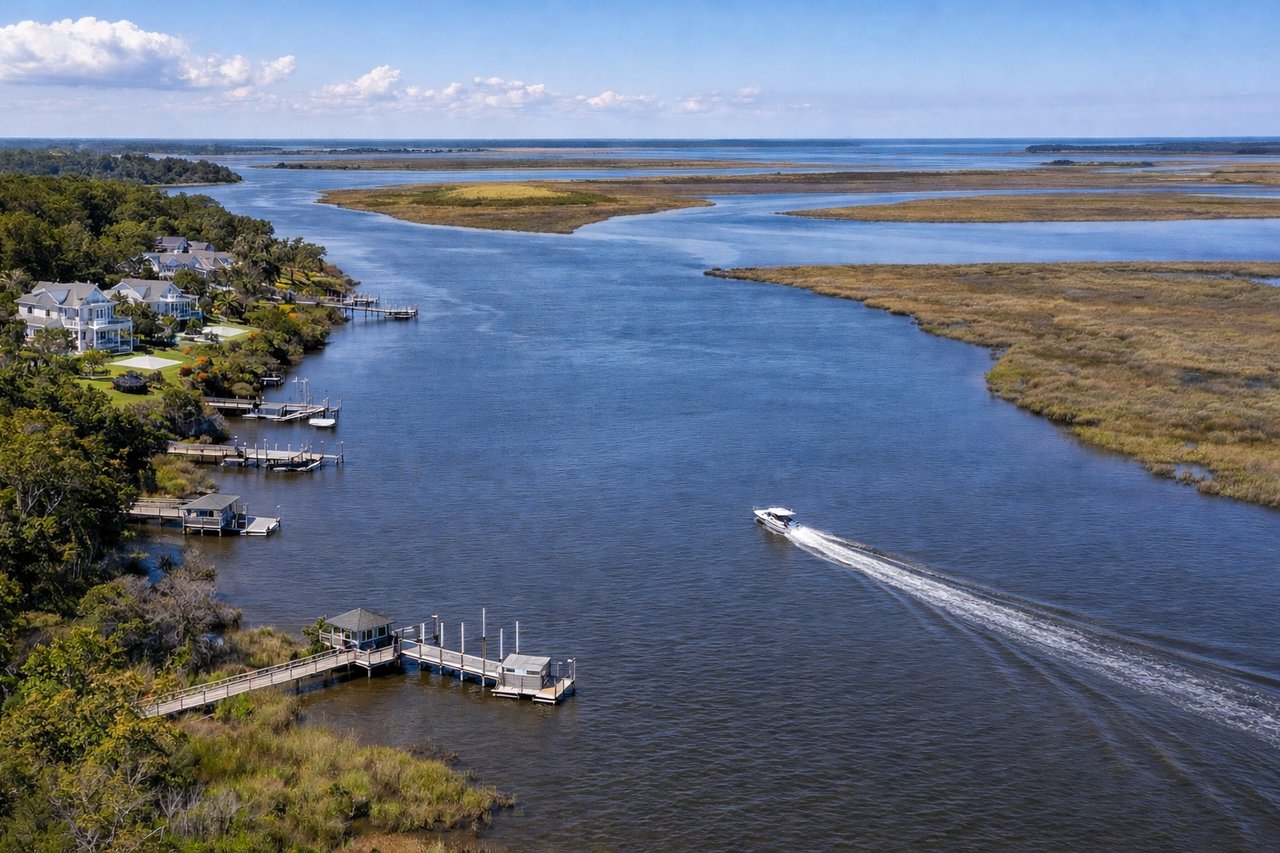
Selling A Waterfront Home In Richmond Hill: Preparation Checklist
Coastal Georgia living Trisha Cook June 18, 2026
Coastal Georgia living Trisha Cook June 18, 2026
Selling a waterfront home in Richmond Hill is not the same as selling a typical residential property. Buyers are evaluating far more than the home itself. They are also considering the type of water frontage, tidal access, dock condition, boat-lift capacity, flood zone, elevation, shoreline, insurance costs, outdoor living areas, and how easily the property supports the coastal lifestyle they are pursuing.
I understand these considerations from both a professional and personal perspective. I live on deep water in Richmond Hill and have sold real estate throughout Richmond Hill and Coastal Georgia since 2007. Waterfront ownership offers an incredible lifestyle, but it also comes with nuances that should be understood and addressed before a property is placed on the market.
This guide explains how to prepare a Richmond Hill waterfront home for sale, what documents buyers may request, which improvements may be worthwhile, how waterfront properties should be marketed, and what sellers should ask before choosing a listing agent. And if any of this feels overwhelming, rest assured knowing that if you choose to list your waterfront home with The Trisha Cook Team, we offer concierge level service to guide you through every step of the way.
A waterfront property’s value and marketability extend far beyond the house.
Buyers may be evaluating:
The stronger your preparation, the easier it is for qualified buyers to understand the property and evaluate its value.
Not every waterfront property in Richmond Hill offers the same use, access, or value.
A deepwater property generally offers more dependable boating access through varying tide levels. Buyers may still ask about approximate depth, channel conditions, bridge clearances, and the route to larger waterways.
A tidal creek property may provide boating access during certain tide conditions but have significantly less water at low tide. The usable access should be represented accurately.
A marshfront property may offer expansive coastal views, wildlife, privacy, and dramatic sunsets without providing direct navigable water access.
A riverfront home may provide direct boating access, but buyers will still evaluate current, depth, dock configuration, shoreline condition, and the distance to larger waterways.
These homes may offer water views or recreational use but should not be marketed as deepwater or navigable waterfront unless that description is accurate.
Clear classification helps prevent confusion and ensures that your home is positioned for the correct buyer.
Before your waterfront home goes on the market, gather the records buyers, lenders, insurance providers, inspectors, and closing professionals may request.
Richmond Hill advises owners to understand their flood zone, Base Flood Elevation, floodway status, and whether wetlands may affect the property. FEMA elevation certificates for some properties built in the floodplain may also be available through local Planning and Zoning records.
Documents to gather before listing may include:
Having these records available does not eliminate every buyer question, but it can make the property feel more organized, transparent, and easier to evaluate.
When you list with The Trisha Cook Team, we help identify the documentation that should be gathered before marketing begins.
Flood insurance costs may affect a buyer’s monthly expenses and overall affordability.
Before listing, determine:
Do not guess about future insurance costs. Buyers should obtain property-specific quotes based on their coverage needs, financing, and insurer.
Clear information helps buyers make informed decisions earlier in the process.
Waterfront buyers frequently pay attention to how a property handles heavy rainfall, tides, and runoff.
Before photographs and showings, walk the property and look for:
Drainage preparation may include:
A clean, well-maintained site can signal that the property has been cared for responsibly.
Shoreline condition can become a major buyer concern if erosion, instability, or previous repair work is visible.
Before listing, evaluate:
Gather records for any bulkhead, riprap, bank stabilization, or erosion-control work that has been completed.
Do not perform last-minute shoreline work without first determining whether permits or approvals are required.
A dock can be one of the strongest selling features of a Richmond Hill waterfront property, but it can also generate detailed buyer questions.
Inspect the dock for:
Also gather information about:
Not every dock needs a complete renovation before listing. Safety issues and material defects should be evaluated, while cosmetic improvements should be considered in relation to cost and buyer expectations.
Georgia’s Coastal Resources Division regulates docks, shoreline stabilization, marinas, and certain structures located in or near coastal marshlands.
Depending on the property, useful records may include:
Missing or unclear documentation does not automatically prevent a sale, but it can affect buyer confidence, due diligence, negotiations, insurance, financing, or closing timelines.
Identify documentation gaps before the property goes under contract.
A waterfront lot should look well maintained without creating confusion regarding protected areas, buffers, shoreline boundaries, or marshland.
Before completing cleanup near the water:
The objective is to improve presentation while respecting the property’s natural and regulated features.
For many buyers, the outdoor spaces are a primary reason to purchase a waterfront home.
Focus on:
Keep the setup clean and intentional.
Use a limited amount of furniture so the view remains the focus. Remove worn cushions, unnecessary storage, excessive décor, equipment, and personal items that distract from the setting.
The water view may be one of the strongest marketing assets, but it should be presented accurately.
Before photographs:
Do not alter listing images in a way that misrepresents water depth, vegetation, neighboring properties, shoreline condition, or the actual view.
The goal is to accentuate the property’s strengths without creating disappointment when the buyer arrives.
The setting may attract the buyer, but the home still has to support the value.
Prioritize:
Give particular attention to the rooms that connect visually or physically to the waterfront, including:
The interior should complement the waterfront setting rather than compete with it.
Not every improvement will produce a meaningful return.
Before beginning a major renovation, consider:
High-impact preparation often includes:
Compass Concierge may allow eligible sellers to complete certain improvements with payment due at closing, subject to program terms and approval.
A Richmond Hill waterfront home should not be valued solely by comparing it with nearby inland homes.
Pricing should consider:
Two homes with similar square footage may have significantly different values if one offers reliable boating access, a permitted dock, a functional lift, and strong shoreline conditions while the other does not.
Waterfront marketing should show more than individual rooms.
It should communicate the relationship between:
Depending on the property, The Trisha Cook Team’s waterfront marketing may include:
Because we have boat access, we may be able to capture the home, dock, shoreline, and water-facing elevation from perspectives that cannot be photographed from the yard or by drone alone.
The first image should be the photograph most likely to stop the right buyer from scrolling.
Depending on the property, the strongest first image may be:
We refer to this as the money shot.
The correct choice depends on what makes that specific property most valuable and memorable.
Waterfront buyers frequently conduct more detailed due diligence than buyers purchasing a standard residential property.
Be prepared to answer:
Preparing accurate answers before listing can reduce uncertainty and make the home easier to purchase.
Before placing your property on the market:
The best Realtor for a Richmond Hill waterfront home should understand more than general pricing and marketing. Look for an agent with firsthand knowledge of deepwater living, tidal access, docks, boat lifts, flood zones, elevation records, shoreline concerns, insurance questions, and waterfront buyer expectations.
Trisha Cook is a Richmond Hill deepwater homeowner and has sold real estate throughout Richmond Hill and Coastal Georgia since 2007. The Trisha Cook Team provides waterfront-specific pricing, preparation, documentation assistance, and marketing that may include aerial, video, 360-degree, HDR, lifestyle, and boat-access media.
Choose an agent who can explain how the property’s water access, dock, flood zone, elevation, shoreline, view, outdoor living areas, and boating lifestyle affect value.
Ask each agent:
A waterfront property should not be priced or marketed like a typical suburban home.
A waterfront specialist is not legally required, but direct waterfront knowledge can be highly valuable.
Waterfront properties involve specialized pricing factors, permits, inspections, flood considerations, insurance questions, dock evaluations, shoreline concerns, and buyer expectations that may not arise in a standard residential transaction.
The value depends on more than square footage and nearby sales.
Important factors may include:
The most accurate analysis compares the property with homes offering genuinely similar water access and amenities.
Deepwater generally refers to more dependable boating access through varying tide levels. Tidal creek access may be limited at lower tides. Marshfront property may provide expansive views without direct navigable access. Waterfront is a broad term that may include rivers, creeks, lagoons, lakes, ponds, marshes, or navigable deep water.
The property should be described accurately because these distinctions affect use, buyer expectations, and value.
Start by gathering flood, elevation, insurance, dock, boat-lift, shoreline, repair, and drainage records.
Then inspect and prepare:
The final step is creating a waterfront-specific pricing and marketing strategy.
Useful documents may include:
Not every sale requires one, but buyers, lenders, and insurance providers may request it.
If an elevation certificate exists, locate it before listing. If one is unavailable, discuss whether obtaining one would help buyers evaluate the property more confidently.
Flood insurance can affect affordability and buyer demand because it contributes to the total cost of ownership.
Sellers should know the current premium, flood zone, elevation information, claim history, and whether an elevation certificate is available. Buyers should obtain their own insurance quotes rather than relying solely on the seller’s current cost.
A new permit may not be required solely because the property is being sold, but buyers may request documentation showing that the dock, boat lift, shoreline improvements, and later modifications were properly authorized.
Gather all available records before listing and verify property-specific questions with the appropriate agency.
It can.
Missing permits or undocumented modifications may affect buyer confidence, due diligence, financing, insurance, negotiations, or the closing timeline. Identify the issue before marketing so the appropriate response can be determined.
Not every dock needs to be renovated.
Safety concerns, damaged boards, electrical problems, lift issues, piling deterioration, or significant deferred maintenance should be evaluated. The decision should consider repair cost, expected buyer reaction, competing listings, property value, and applicable permitting requirements.
Visible erosion, unstable banks, failing bulkheads, or shoreline damage may concern buyers and inspectors.
Inspect the shoreline, gather records for previous work, and avoid completing unapproved stabilization or fill work. Significant concerns may warrant professional evaluation before listing.
Marketing should show the relationship between the home, view, outdoor living areas, shoreline, dock, boat lift, and water access.
A comprehensive plan may include:
Yes, when weather, tide, access, and safety conditions allow.
The Trisha Cook Team has boat access that may be used to photograph or film the dock, shoreline, water-facing elevation, and boat approach. This can reveal perspectives that cannot be captured from the yard alone.
The strongest strategy generally combines:
Overpricing can reduce early interest, while poor preparation can create avoidable buyer objections.
That depends on current waterfront inventory, buyer demand, competing listings, interest rates, property condition, price range, seasonality, and the seller’s goals.
A deepwater home with a dock may be operating in a different market segment from an inland Richmond Hill home or a marsh-view property without boating access.
The timeline depends on:
Highly specialized waterfront properties may require more targeted marketing and a smaller pool of qualified buyers.
Private marketing may be appropriate for sellers who prioritize discretion, want to test demand, or need additional time to prepare.
Public marketing generally provides broader exposure. Some sellers benefit from a phased strategy that begins privately and transitions to full public marketing.
The best approach depends on the property, price, condition, timeline, privacy needs, and current buyer demand.
Selling a waterfront home in Richmond Hill requires more than basic listing preparation.
Before recommending a price or marketing strategy, The Trisha Cook Team evaluates:
If you are considering selling a deepwater, riverfront, tidal creek, marshfront, or other waterfront property in Richmond Hill, request a confidential waterfront property review with The Trisha Cook Team.
Suggested button text:
Request My Waterfront Property Review
Stay up to date on the latest real estate trends.

Buying a Home
Two private Hilton Head communities, with different boating setups and practical questions buyers should settle before choosing a home.

Buying a Home
Look beyond the dues to understand reserves, planned projects, special assessments and the questions that need written answers.

Commercial / Investment Properties
What rental owners should compare beyond the monthly fee, from leasing and maintenance to records, inspections and time.

Community Guides
What to know about this Richmond Hill community, its homes, amenity plans and place in a Savannah-area retirement search.
Coastal Georgia living
What the winter project could mean for beach access, property showings and buying or selling on Tybee in 2026–2027.

Selling A Home
Luxury photography is only the beginning. Pricing must account for the specific neighborhood, Club access, lot position, upgrades and competing new construction.

buyer education
What Michael Toma’s latest Georgia Southern report tells us about jobs, new construction and real estate decisions in Chatham, Bryan and Effingham counties.

Community Guides
Compare ownership costs, Club structure, golf, marina access, rental rules and the practical differences buyers should understand before choosing between Hilton Head P… Read more
Join hands with Savannah’s premier coastal specialists for a real estate experience that’s as unique as you are. Whether buying, selling, or exploring new opportunities, our team is dedicated to guiding you with warmth, and expert insight.