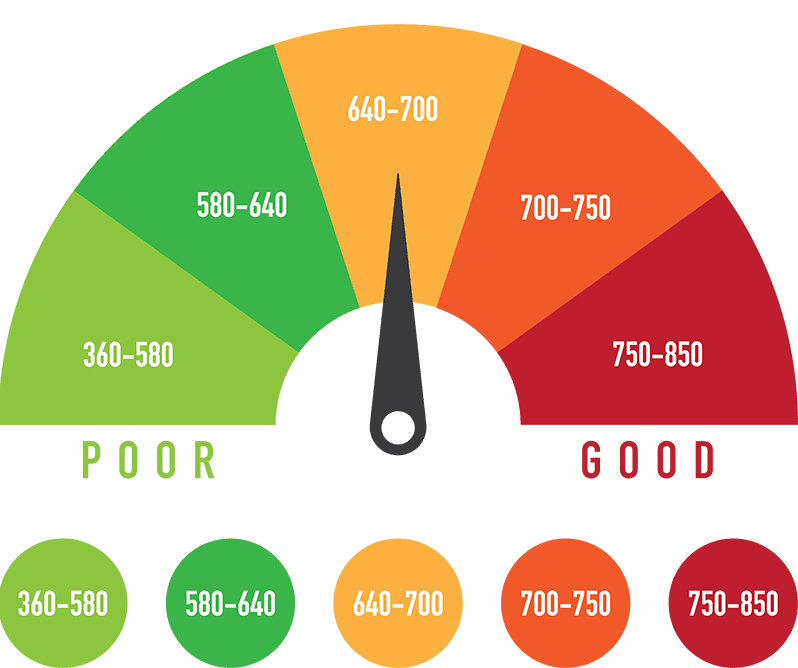
A healthy credit score is a major factor in determining the interest rate on your mortgage. Typically, a higher credit score results in a lower interest rate. This means that just a few points on your credit score can either increase or decrease your monthly mortgage payment by hundreds of dollars. As a potential home buyer, it is helpful to know how your credit score is determined and how to maintain a healthy score.
Once you determine that you are ready to enter the home buying market, it is wise to give yourself time to tackle any credit issues prior to submitting a mortgage application. These four tips will help you stay on top of your credit and place you on the path to owning your dream home!
1.) Avoid Late Payments
Although this should go without saying, paying your bills on time is necessary for maintaining a healthy credit score. Many potential home buyers are unaware that just one late payment can damage your credit score. Not only can a late payment damage your credit score but it can also lead to additional fees or an increase in rates depending on the credit card issuer. Also, late payments can remain on your credit history for seven years.
Luckily, there are ways to avoid making late payments such as signing up for auto-pay or setting calendar reminders. You can also consider making weekly payments instead of the regular monthly payment to help you stay on budget and avoid late payments.
2.) Don't "Max Out" Your Cards
Contrary to popular belief, the limit on your credit card is not meant to be reached. Maxing out your credit card comes with many consequences such as a drop in your credit score, a closed account or a penalty rate.
When you use all of your available limit on your card, it results in a 100 percent utilization ratio. A credit utilization ratio is simply a measure of how much of your available credit you are using and is expressed as a percentage. Experts recommend that this number remains below 30 percent but say it is even better if this number stays below 10 percent.
A maxed out credit card may signify a financial hardship to a credit card issuer and result in a closed account. While it is best to avoid this issue altogether, if your account becomes deactivated due to maxing out your credit line, some issuers will reinstate your card once a certain amount of the debt has been paid.
Maxing out your card could result in triggering your card's penalty APR. This penalty APR is usually associated with an interest rate of 30 percent. Although maxing out your card does not necessarily mean that the penalty rate will kick in, refrain from maxing out your card to avoid potential issues.
3.) Try Not to Close Old Accounts
While closing a credit card account may sound like a good idea, there are both pros and cons that come along with this decision. Before closing an account, it is important to determine whether it will be a pro or a con for you.
Remember that the ultimate goal of this article is to help you maintain your healthy credit score. Maintaining debt can actually be valuable for your overall credit score (assuming you are managing your debt responsibly). When you close an account, your credit card utilization rate as well as the average age of your accounts are impacted. Depending on your situation, this could have a negative impact on your credit history.
Tip: Remember that when you close on a card your overall amount of available credit is decreased. Once you close an account, try cutting back on your spending to avoid an increased credit utilization rate.
4.) Minimize Inquiries
If you have ever applied for a loan, credit card, or any other type of credit, you have most likely been subject to a credit inquiry. While it is nearly impossible to avoid having any kind of inquiry on your report, having too many credit inquiries can negatively impact your credit score.
One way to minimize the amount of inquiries on your report is to track the number of times that you have applied for credit in the past two years. With a good credit score, it is recommended to wait about three months in between credit inquiries.
Tip: Remember that while credit inquiries typically have a minor impact on your credit score, they usually last on your credit report for two years. Try to avoid any unnecessary credit inquiries as they can quickly add up.
Photo Courtesy of JCount
As a potential home buyer, we want to ensure that you are educated on all aspects of the buying process. Contact us today for a buyer consultation and be on the lookout for our Home Buyer Seminars (hosted quarterly).